

‘Operation Safe Family’: Whose Safety is It in Reality- Sema Güçlü
 Socialist
Sep 18, 2026 05:04
256
Socialist
Sep 18, 2026 05:04
256
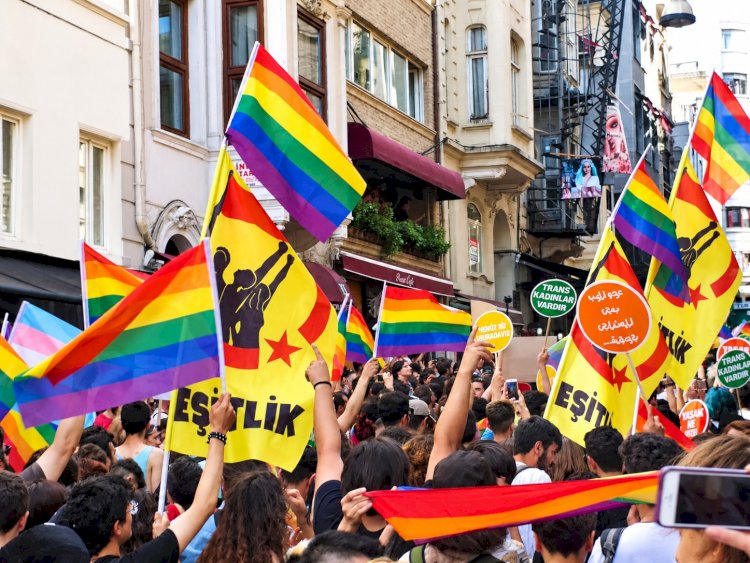
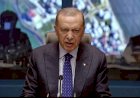
The authoritarian government of President Recep Tayyip Erdoğan has unleashed a sweeping state-led crackdown, ironically titled "Operation Safe Family," targeting dozens of civil society organizations, human rights advocates, independent venues, and the LGBT+ community. Raids executed across fifteen provinces have resulted in the mass arrest of activists, labor organizers, and journalists, alongside arbitrary blockades on independent media outlets and public assemblies. Framed by state prosecutors as an effort to safeguard traditional values, this orchestrated repression is a calculated mechanism of state terror designed to eliminate institutional opposition and to strengthen its political legitimacy among its base that is in decline.
The crackdown has swept across 15 provinces, including major metropolitan centers like Istanbul, Ankara, Izmir, and Mersin, targeting at least 162, nine NGOs. In just a few days, court proceedings resulted in the formal arrest of at least 87 people nationwide, including 28 in Mersin, 20 in Istanbul, 16 in Izmir, and 13 in Ankara, alongside journalists.
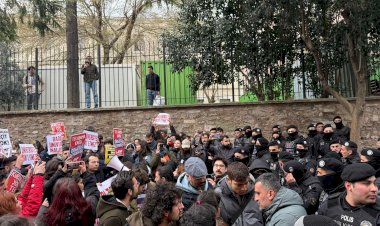
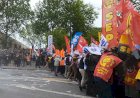
Police attacked those who staged street protests against the operation, which was carried out through nationwide home raids and a massive media campaign. While the AKP permitted no protests, activists were detained. Hundreds of people, including SEP comrades, were held in custody for days. Access from Türkiye was blocked for X accounts that actively opposed the campaign of repression. The SEP's official X account is among those blocked.
While official narratives frame these actions as a necessary defense of traditional “family structures” and “public morality”, a closer look at Turkey’s political landscape reveals a far more calculated motive: an authoritarian regime using conservative identity politics to secure its own survival. Setting the suppression of LGBTI+ individuals—driven by bigotry—as the agenda amidst a grim picture of impoverishment signifies both the polarization of the working class and the vigorous implementation in Türkiye of a sexist agenda that is global in scope.
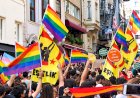
This reliance on "family values" is not an isolated event but part of the ruling Justice and Development Party’s (AKP) long-standing strategy. For over a decade, all Pride marches in Türkiye have been completely banned; even film screenings related to the event are prohibited by city administrators and the government, and activists face systematic repression. Over the past decade, the AKP has increasingly integrated family-centred conservative propaganda into its core governance agenda. By placing an idealized, conservative family model at the center of public discourse, the state systematically marginalizes oppositional institutions and LGBT+ communities. Targeting these vulnerable groups serves a dual purpose for the ruling class: it consolidates its core conservative base by manufacturing an artificial culture war, while simultaneously providing a sense of moral legitimacy at a time when the government's broader authority is rapidly eroding.
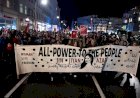
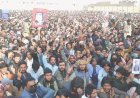
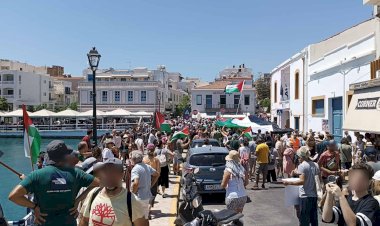
The iron fist of the state has been visible in its violent suppression of public assembly and protest. When human rights advocates, political parties, women's organizations, and citizens attempted to gather for press conferences to protest the illegal shutdowns and arrests in cities like İzmir, Istanbul, and Ankara, law enforcement intervened before statements could even be read out loud. Police forces encircled peaceful demonstrators, violently dragged activists, and detained over 100 people in Istanbul alone, including reporting journalists whose equipment was seized or smashed. This level of brutal force that has been exercised even before a crowd can fully form demonstrates how comfortably the regime wields dictator-like powers when it knows its actions will be cheered on by its core conservative constituency.
The timing of such moral panics is rarely accidental. At the same time, the point Erdoğan has reached regarding the loss of social legitimacy and his political base in Türkiye no longer allows him to win further elections. Faced with the reality that he would lose elections, opposition figures from the bourgeoisie—including leaders, mayors, and elected politicians—have been harshly imprisoned over the past two years. The main opposition party is being seized and fractured through judicial means. Under these conditions, the campaign of repression—part of Erdoğan's attempts to completely curtail democratic rights and freedoms—is also bolstered by the trends exemplified globally by Trump. Historically, the regime escalates conservative rhetoric and authoritarian pressure whenever domestic crises threaten its stability. Today, Turkey faces severe socio-economic distress, marked by soaring extreme inflation, widespread youth unemployment, economic crisis, and a general loss of hope among the population. Instead of addressing these fundamental structural problems or formulating policy solutions for the working class, the government chooses to polarize society. By inventing internal threats to the ‘traditional family’, the state shifts public focus away from economic hardship and channels collective anxiety into manufactured social divisions.
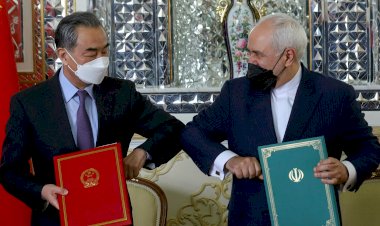
This domestic strategy aligns closely with Ankara’s broader international conduct, where conservative and religious symbolism is frequently used as a diplomatic tool without delivering tangible societal benefits. A prime example is the recent Mecca Joint Defense Agreement signed between Turkey, Saudi Arabia, and Pakistan. While marketed to domestic audiences as a grand display of Islamic solidarity and strategic independence, such international alignments ultimately serve as hollow political performance. These pacts allow conservative leaders to project ideological authority at home while sitting at the same global bargaining tables alongside traditional Western allies, offering no real solutions to the daily struggles of their working masses.
As regional conflicts escalate with ongoing warfare involving Iran and the recent Houthi blockades of the Bab-el-Mandeb Strait global trade routes face disruption, and international oil prices are soaring. For a nation heavily dependent on energy imports and already wrestling with a fragile currency, these external shocks guarantee an even deeper economic crisis in the near future. The AKP administration is fully aware of this approaching storm and understands that rising living costs will further erode its public support.
"Operation Safe Family" is a deeply ironic title: under this regime, families, youth, women, and workers are anything but safe. In a country where the minimum wage sits below the hunger line, child workers die in unsafe conditions, femicides are routinely covered up, and workers demanding basic rights face brutal police violence, this operation is a deceptive lie. It is not designed to protect society, but to manipulate public discontent, promote scapegoating, create artificial divisions, and mask the AKP’s eroding political legitimacy in the face of deep economic and political failure. Crucially, this crackdown is not just an assault on LGBT+ communities; it is a direct war against all organized resistance and very basic rights and freedoms. The only way to repel this campaign of repression is for working people to mobilize against Erdoğan by building a strong united front in the face of their worsening living conditions. Only in this way can Erdoğan's manufactured agendas be overcome and the political war he has waged against rights and freedoms be won.