

Iran in the Days of Ceasefire – Nida Kaveh
 Socialist
May 27, 2026 01:30
753
Socialist
May 27, 2026 01:30
753
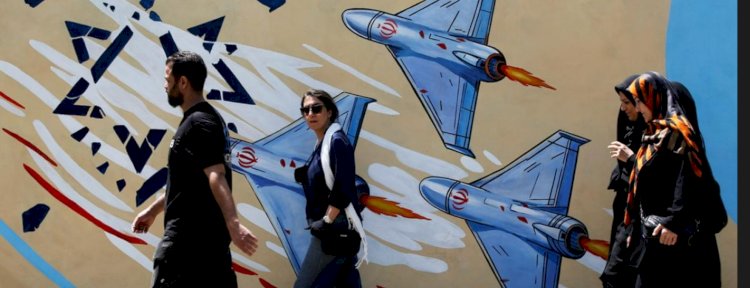
The 2026 ceasefire with the US imperialism meant a transformation of the crisis rather than the end of the war in Iran. While the state apparatus attempts to present itself as the "victor of national defense," a completely different mood is emerging in the streets, factories, universities, and prison corridors. Today, Iran's political atmosphere resembles neither the clarity of a full revolutionary upsurge nor the absolute stability of the regime. Rather, it resembles an interim period where historical fatigue and suppressed rage rub against one another.
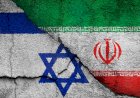
The US-Israeli attacks and the subsequent ceasefire provided the regime with a short-term "national unity" maneuver, and the state media marketed this as the "victory of the resistance"; however, the economic ruin, energy crisis, unemployment, and inflation created by the war severely shortened the social lifespan of this propaganda. This situation is also confirmed by Reuters and various European-based observer reports; in the post-war period, the Iranian administration has turned toward both pursuing external negotiations and expanding harsh security policies domestically.
Daily Life With No Normalcy
Today, the fundamental emotion observed in Iranian cities is a state of "inability to normalize." People go to work, markets are open, transportation continues; yet the fabric of daily life is shattered. The collapse of the Rial, post-war supply crises, and the continuation of sanctions have turned the lives of the working classes into a chronic struggle for survival. Especially on the peripheries of major cities and in industrial zones, wages melt away within a few weeks, while rents have effectively become dollarized.
The internet shutdowns and surveillance mechanisms implemented after the January 2026 protests have also been institutionalized. Academic research shows that internet shutdowns in Iran are no longer merely technical censorship but have become a "social discipline architecture." In this atmosphere, society is not divided into two; it is atomized. There is no sign of a unified "middle-class democratic bloc" of the kind envisioned by the classical liberal opposition. Likewise, the regime's traditional ideological base is also undergoing severe erosion. What emerges is an unorganized but deep reservoir of rage.
Dissolution, but No Collapse
The narrative frequently repeated in Western media that "the regime is now finishing" is overly reductionist. The Iranian state still possesses a massive capacity for governance, international diplomacy, repression, a security network, and an economic patronage system at the same time. However, it is also in the midst of a serious crisis of hegemony; for instance, their shift from excluding unveiled women to embracing them is a striking example of flexible inclusion. In the words of Antonio Gramsci, the issue is not just the apparatus of force, but a methodological crisis where it must also rely on the "manufacturing of consent." Since it can no longer rule as before, flexing toward a "new way of ruling" has become inevitable. As a result of long years of major struggles and heavy prices paid, a step back was taken regarding the hijab, which had been a central symbol. Thus, the regime can incorporate masses that are otherwise opposed to it into its own base along the tracks of nationalism and patriotism.
It is precisely in this area that the regime in Iran is experiencing a major erosion today. The state's ideological narrative has collapsed, especially among the younger generations. When the women's movement, the discontent experienced by oppressed nations, workers' resistance, and post-war economic decay converge, the regime's presentation of itself as an "anti-imperialist resistance state" is no longer as effective as it used to be. Yet, this dissolution does not automatically produce revolutionary dynamics either. Different factions of the Iranian bourgeoisie, the security apparatus, and regional power balances allow the regime to sustain its controlled crisis management.
The Workers' Movement: A Suppressed but Decisive Dynamic
The real historical knot in Iran remains the working class. In recent years, strikes by teachers' unions, oil workers, municipal laborers, truck drivers, and especially those in the petrochemical sector have been among the areas the regime fears most. Because the economic backbone of the Iranian state still relies on the energy and logistics sectors.
Interviews with exiled Iranian socialists and union statements reveal that the regime views independent workers' organizations specifically as a "national security threat."
Today, the fundamental problem of the Iranian workers' movement is not just repression; it is fragmentation and a crisis of political representation. A significant portion of the traditional left is either in exile, liquidated, or has withdrawn into reclusion. Despite this, the economic crisis is re-centralizing the workers' movement.
Although millions of people in Iran share the same economic fate, this shared experience has not yet fully transformed into a unified political subject. However, the continuity of strikes, the spread of wage rebellions, and the intersection of the women's movement with labor struggles keep the possibility of a different social bloc alive for the future.
Executions
Following the 2025–2026 Iran–Israel/US war and the subsequent ceasefire, executions in Iran escalated dramatically. Human rights organizations speak of accelerated execution processes, particularly regarding political files, protesters, Kurdish prisoners, Balochi detainees, and individuals tried on charges of "espionage." According to reports published by hra-news.org, hengaw.net, iranhr.net, and radiozamaneh.com, at least 47 executions were carried out in Ordibehesht 1405 (April–May 2026) alone; furthermore, 5 new death sentences were upheld, and 10 new death sentences were issued. Human rights organizations also report that: at least 44 people connected to the protests face the risk of execution, hundreds of individuals face the risk of the death penalty under charges of "moharebeh" (waging war against God's government), "baghi" (armed rebellion), "espionage", and "activities against national security", and many executions are carried out secretly without informing families.
Additionally, it is noted that due to internet blackouts in Iran, the real number of executions could be much higher; certain executions, especially in Kurdish and Balochi regions, have never entered official records, and the daily average execution rate rose significantly in the early months of 2026.
Secret trials, confessions extracted under torture, withholding bodies from families, and blocking final visits have now become systematic practices. The purpose of these executions is not only to eliminate dissidents but to paralyze the collective psychology of society. The state displays one of the classic fascist reflexes here: producing politics not out of law, but out of fear. However, historically, the continuous expansion of naked violence usually indicates the erosion of legitimacy rather than the strengthening of sovereignty. While wartime conditions provided a lifeline to the regime's legitimacy, they also restricted the public's ability to raise its voice, paving the way for the masses in Iran to be dragged into very severe conditions in every sense. At the point reached today from imperialism's claim of "liberating" the Iranian people while attempting regime change in Iran, the scale of imperialism's reactionary nature is felt to the ultimate degree.
On a Threshold
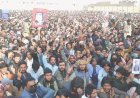
Today's Iran can neither be read merely as a "collapsing regime" nor as a newly consolidated, powerful state. It is, rather, a historical knot where capitalist crisis, imperialist encirclement, regional wars, and internal class contradictions overlap. In the days of the ceasefire, silence prevails. Rage against the US and Israel is at an all-time high. Following the government's large mass demonstrations, the days of the ceasefire halted not only the war itself but also the mass mobilization that had united behind the ruling power thanks to the war; yet, it did not eliminate the historical tension and contradictions within Iranian society.
The pain of thousands slaughtered in the bombardments has merged with the pain of those killed in street protests just six months ago. Deprivation, poverty, a prolonged mourning, rage… What circulates today in the streets of Tehran, the industrial zones of Tabriz, the cities of Kurdistan, and the oil facilities in Khuzestan is perhaps not hope; but it is fear beginning to lose its old certainty. And sometimes history progresses exactly like this: first, people learn not to believe in the future, but to stop living as they used to.