

The Voice of the Disappeared: Mahrang Baloch Sentenced to Life Imprisonment-Laila Safi
 Socialist
Jul 8, 2026 04:59
257
Socialist
Jul 8, 2026 04:59
257
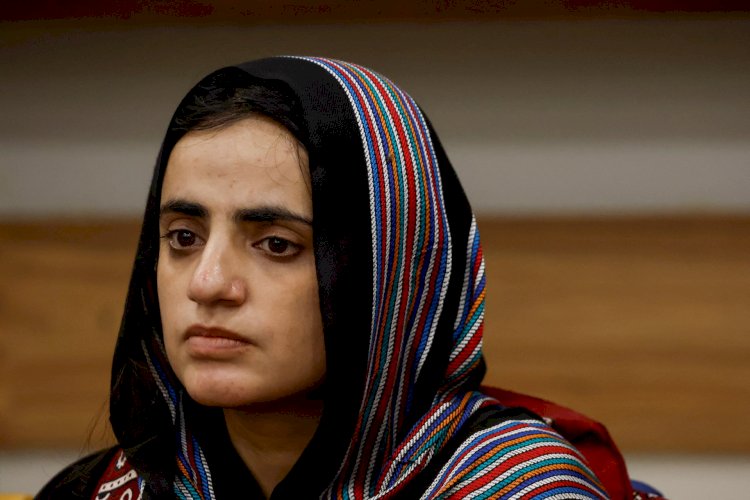
Mahrang Baloch is one of the most prominent figures of the contemporary Baloch human rights movement and has gained international recognition for her work. She has led determined campaigns against enforced disappearances, extrajudicial killings, structural violence, and the systematic marginalization of Balochistan—issues that have persisted for more than fifty years and intensified significantly after the events of September 11. Through her unwavering activism, Mahrang has brought the humanitarian crisis in Balochistan to the attention of both the Pakistani public and the international community.
Her advocacy, however, has been met with severe state repression. In June 2026, Pakistan’s Anti-Terrorism Court sentenced her to life imprisonment over protests held in Gwadar in 2024 that resulted in the death of a security officer. Throughout the proceedings and in independent public statements, Mahrang has categorically rejected all charges, insisting that she has never been involved in any act of violence. She maintains that the case is politically motivated and intended solely to silence her human rights activism.
International human rights organizations have likewise raised serious concerns about the fairness and transparency of the trial, calling for the case to be reviewed. The life sentence has once again drawn global attention to the long-standing issues of enforced disappearances and political repression that Baloch activists and international organizations have documented for years.
A Political Life Shaped by Loss
Mahrang Baloch’s activism is rooted not only in political conviction but also in profound personal tragedy. The defining turning point in her life came in 2009 when her father, Abdul Ghaffar Langove, was abducted by unidentified security personnel. Some time later, his tortured body was discovered. Her brother was also forcibly detained for a period before being released following intense public pressure.
These experiences transformed the course of Mahrang’s life. Trained as a medical doctor preparing for a career in medicine, she instead turned her grief into a lifelong struggle for justice. She became a full-time organizer dedicated to uncovering the fate of the disappeared and bringing together families searching for their missing loved ones.
Baloch Intellectuals and Activists: Targets of Systematic Repression
Human rights organizations and local opposition groups argue that enforced disappearances in Balochistan are not isolated incidents but part of a systematic policy targeting the region’s educated and politically active population. According to these reports, individuals who disappear without legal process include:
-
Teachers, poets, and intellectuals who promote education and critical thought.
-
Political activists who organize demonstrations and challenge state policies.
-
Journalists and bloggers documenting human rights abuses.
-
Students and young people regarded as potential leaders of future social movements.
-
Family members of activists, despite having committed no crime themselves.
-
Ordinary civilians allegedly targeted to create a climate of fear.
In many documented cases, families maintain that their missing relatives had no links to any armed or illegal organizations. Instead, they believe these individuals were targeted because of their ethnic identity, political opinions, or personal associations with activists.
Enforced Disappearances: An Unresolved Political Crisis
Enforced disappearances and arbitrary detentions remain among the most painful and persistent issues confronting the Baloch people. For many observers, they symbolize the absence of meaningful rule of law in the region.
Organizations including Amnesty International, Human Rights Watch, and the Human Rights Commission of Pakistan have documented thousands of allegations involving individuals allegedly detained without official records or notification to their families. Many families spend years not knowing whether their loved ones are alive or dead.
Pakistani authorities reject allegations that enforced disappearances constitute official state policy. They argue that investigative commissions have been established to examine such cases. Critics and independent legal experts, however, contend that these mechanisms have proven ineffective and have failed to resolve thousands of reported disappearances.
The Emergence of Collective Protest
As repression intensified, families searching individually for justice gradually united into an organized grassroots movement.
Mahrang Baloch became one of the founding leaders of the Baloch Yakjehti Committee (BYC), which evolved into one of the largest civil rights movements in Balochistan.
The BYC organized long marches, sit-ins, and mass demonstrations advocating nonviolent resistance. One of the movement’s defining characteristics has been the prominent leadership of women—particularly mothers and female relatives of the disappeared—who have stood at the forefront of protests.
Core Demands of the Baloch Yakjehti Committee (BYC)
-
Immediate disclosure of the whereabouts of all disappeared persons.
-
Independent investigations into unlawful detention, torture, and extrajudicial killings, with accountability for those responsible.
-
Either the release of detainees or their presentation before independent courts in accordance with due process.
-
Protection of the constitutional right to peaceful assembly and protest.
-
Recognition of the political and economic rights of the Baloch people, including equitable access to the resources of their own region.
Structural Marginalization and Economic Inequality
Although Balochistan is Pakistan’s richest province in terms of natural resources—including natural gas, gold, and copper—activists argue that the resulting wealth has brought little benefit to local communities. They point to inadequate healthcare, poor educational infrastructure, and limited access to basic services such as clean water and electricity. This economic marginalization is compounded by cultural discrimination, including insufficient institutional support for the Baloch language and culture in education and public administration.
The crisis in Balochistan extends beyond human rights violations. It is also rooted in decades of structural neglect and unequal economic development. According to a Marxist analysis, democratic tasks such as national self-determination, land reform, and the dismantling of feudal structures have remained unresolved because Pakistan’s ruling class is closely tied to imperialist interests and capitalist power structures. From this perspective, the Pakistani state has sought to preserve national unity primarily through military force and coercion rather than democratic inclusion. The result is a striking contradiction: Pakistan possesses one of the world’s most powerful military establishments, including nuclear weapons, while continuing to struggle to provide essential public services such as education, healthcare, and infrastructure.
The Gwadar Protests: A Turning Point
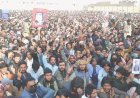
In 2024, large-scale demonstrations erupted in the strategic port city of Gwadar as families of the disappeared and members of the BYC gathered to demand justice. Initially organized as peaceful sit-ins, the protests called for an end to enforced disappearances and greater protection of fundamental rights.
As attendance grew into the tens of thousands, security forces attempted to disperse the crowds by force, escalating tensions. During the clashes, at least one paramilitary officer was killed, while hundreds of protesters and civilians were reportedly injured. Activists claim that security forces opened fire, killing at least four civilians, although independent verification has been difficult because of restrictions on access and reporting.
The events were followed by a sweeping crackdown in which thousands of people were reportedly detained.
Many observers interpret Mahrang Baloch’s life sentence as an effort by the state to hold the movement’s leading figure responsible for the unrest in Gwadar.
BYC and Women’s Leadership in Civil Resistance
Today, the Baloch Yakjehti Committee is widely regarded as one of South Asia’s most significant contemporary civil rights movements. It gained international attention through the “Baloch Long March,” during which participants walked hundreds of kilometers to demand justice for victims of enforced disappearances.
Perhaps the movement’s most remarkable feature is the leadership role played by women. In a society often characterized as conservative and patriarchal, women organizing demonstrations, leading marches, and publicly demanding justice has given the movement considerable social and moral legitimacy.
A Marxist Perspective on the Way Forward
From a Marxist perspective, the liberation of the Baloch people cannot be achieved under the leadership of the local bourgeoisie or traditional tribal elites (sardars). Instead, it requires leadership rooted in workers, peasants, youth, and other oppressed social groups capable of combining democratic demands with socialist transformation.
According to this analysis, while the Pakistani state intensifies repression in Balochistan to safeguard elite interests and fulfill obligations to international financial institutions such as the IMF, workers across Pakistan face exploitation under the same political and economic system. In this view, a Baloch worker or peasant shares common interests with a textile worker in Karachi or a construction worker in Lahore, all confronting the same structures of capitalist domination.
For this reason, proponents of this perspective argue that the Baloch national movement should build solidarity with other oppressed communities within Pakistan—including the Pashtun Tahaffuz Movement (PTM), Sindhi activists, and marginalized religious minorities. Such unity, they contend, should not be based on narrow ethnic nationalism but on a broader anti-imperialist and anti-capitalist program capable of uniting all oppressed peoples in a common struggle.