

One Hundred Years of Solitude and Cuba
 Socialist
Sep 22, 2026 06:49
235
Socialist
Sep 22, 2026 06:49
235
by Derya Koca
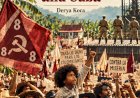
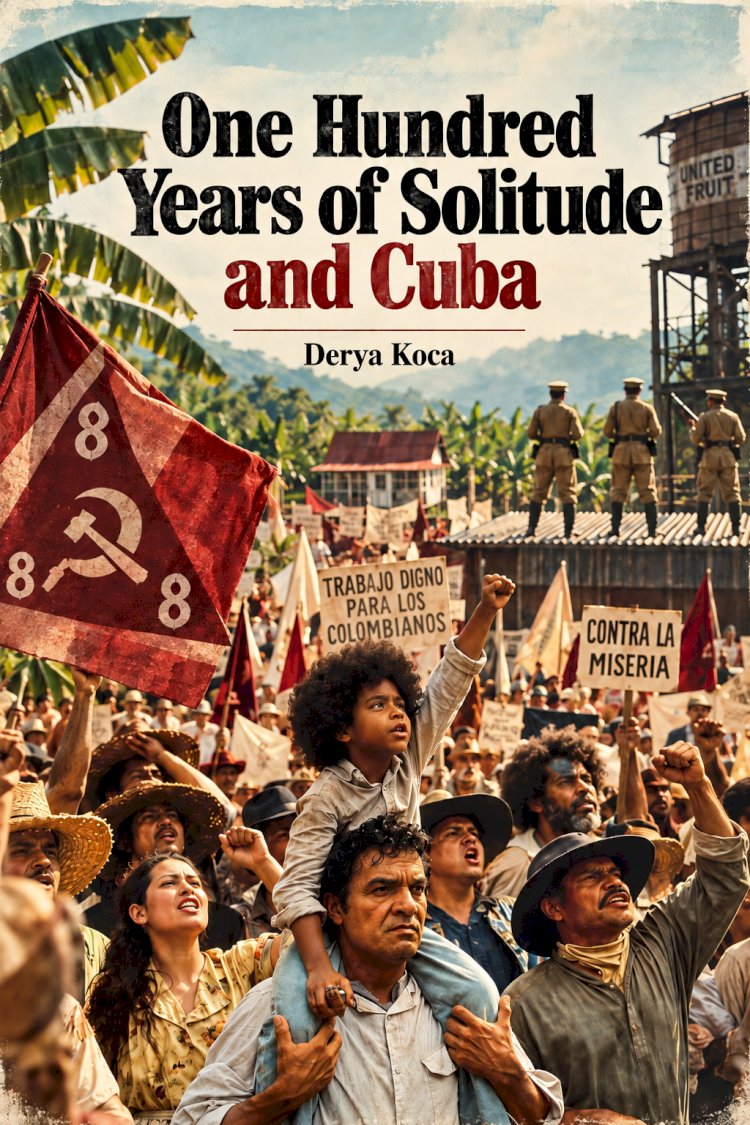
I have been enjoying the One Hundred Years of Solitude series. In the first season, the Liberal-Conservative civil wars, Colonel Aureliano Buendía's uprisings, and the endless cycle of those wars were at the forefront. The second season turns its attention to the birth of the workers' movement in modern Colombia, shedding light on the rise of the class struggle where the old uprisings had exhausted themselves. The series has many shortcomings and weaknesses, but I find the adaptation successful nonetheless, especially because I never expected such extraordinarily difficult forms as Márquez's cyclical conception of time and magical realism to be handled at this level on such a platform.
The second season focuses, in particular, on the modern class relations of Macondo, a fictional town, in a country like Colombia, where class-conscious and revolutionary Marxist traditions have unfortunately been historically weak. The unionization, organization, and strike struggles of the banana workers are portrayed at length, as is, of course, the Banana Massacre. Watching the massacre makes it impossible not to think of Cuba and the present day, because the United Fruit monopoly, known today as Chiquita, did not merely exploit the land and people of Colombia; across Latin America, it established a brutal order that sucked the continent dry, an almost infernal system of exploitation. Cuba, however, rewrote this story.
In 1928, thousands of banana workers employed by the United Fruit Company went on strike in the Colombian town of Ciénaga. Their demands were humane working conditions, fair wages, and healthcare. Their response came in the form of machine-gun fire from the Colombian army, acting on behalf of the company. Minimum three thousands were killed, including the workers and their families. The hand that carried out the massacre belonged to the Colombian ruling classes, but they too owed their very existence to a system that operated entirely in accordance with the interests of these monopolies. Imperialism often does not do its own dirty work; it has its local collaborators do it for them. That is the age-old rule.
United Fruit, the central apparatus of colonial exploitation, was not merely a company that sold bananas. It controlled railways, ports, telegraph lines, and the postal system, and acted with greater power than governments themselves. The people did not call it the "Octopus" for nothing. Honduras and Guatemala were turned into "banana republics," condemned to dependence on a single crop and a single company. The fate of anyone who dared challenge this order was clear. In 1954, Guatemala's elected president Jacobo Árbenz was branded a "communist" because he attempted to distribute land unused by the company to poor peasants. He was overthrown in a CIA-backed coup, and the civil war that followed claimed tens of thousands of lives. The Dulles brothers' ties to the company are another shameful detail in this story.
And this is precisely where we come to Cuba, because Cuba's story is both a continuation of this history and an answer to it.
United Fruit was present in Cuba not with bananas, but with sugar. It acquired vast estates in the Oriente region and operated like a state within a state, with its own factory, railway, and port. It existed in close alliance with Batista's dictatorship. When the revolution took place in 1959, the company was, in the eyes of the Cuban people, one of the most concrete symbols of US exploitation. The company's sugar mills and lands were seized as part of the land reform. The revolution returned to the Cuban people what belonged to them. The monopoly that could topple a government in the banana republics with a single phone call had been defeated by Cuba's workers and peasants.
We know what happened next. As early as 1960, Castro recalled 1954 by declaring, "Cuba will not be Guatemala." And indeed, when the CIA-backed invasion at the Bay of Pigs began in 1961, some of the ships carrying the troops and ammunition had been provided by United Fruit. The operation collapsed and did not end as it had in Guatemala.
At the root of today's policy of blockade, strangulation, and intimidation against the Cuban people lies the fear that "can a country defy this order and survive?" What was being punished was not Cuba's shortcomings, but the possibility that it might serve as an example. That is why suffocating Cuba and denying it room to breathe became the first rule. The roots of decades of blockade, embargo, and aggression can be seen sharply even in the United Fruit example: add to this the many other layers, such as oil, strategic position, and political hegemony.
This is not a story confined to the past; Cuba today is under one of the heaviest sieges in its recent history. In January 2026, following the US intervention in Venezuela and the capture of Maduro, Venezuelan oil stopped flowing to Cuba (and, with an agreement signed just a few days ago, was even tied to the United States); Trump then signed an executive order authorizing tariffs on any country that directly or indirectly supplies oil to Cuba. The aim is to strangle Cuba through hunger and shortages on the scale of what has been inflicted on Palestine. In May, Cuba's Ministry of Energy announced that the country had run out of diesel and fuel; in some regions, electricity cuts lasted 20 to 22 hours a day, and the national power grid collapsed. According even to the United Nations, food production fell by 60%, the supply of medicines declined by 30%, and infant mortality increased. The number of foreign tourists plummeted, while pressure was also brought to bear on countries accepting Cuba's medical missions. In other words, a comprehensive siege is being deployed to leave the Cuban people hungry, without electricity, without medicine, and without money.
Alongside the economic strangulation, there is also a military buildup. Under the pretext of fighting drug trafficking, Trump supposedly sent five warships and thousands of troops to the Caribbean to take control of Venezuela. At one point, the number had risen to 11 warships and 10,000 troops. Since February, US fighter jets and drones have flown 25 times near Cuba, while the USS Nimitz aircraft carrier entered the Caribbean in May. In early September, two US warships docked at the Guantánamo base, while troops were also deployed to Puerto Rico. Moreover, the Wall Street Journal reported that US officials were targeting regime change in Cuba by the end of the year; Trump himself spoke of a "friendly takeover."
Cuba, unfortunately, has also retreated by surrendering to market-oriented rules and implementing a series of market-oriented measures. We have to assess this separately and question the nature of the Cuban government as well. Without doing so, the most decisive and qualitative dimension of the issue would be missing. For now, let us content ourselves with remembering Cuba through the echoes of Colombia.
What happened to Macondo happened to the continent. One Hundred Years of Solitude became a classic because it succeeded in telling the story of the oppressed nations, the poor, and the workers of the colonial order. But there is one country that ended this story differently. Cuba became a country where these monopolies were defeated.
Against those who seek to destroy the gains of the revolution, unconditionally and without reservation: Long live Cuba!