

PO of Argentina: Bribe of the Century
 Socialist
Feb 13, 2026 10:06
1060
Socialist
Feb 13, 2026 10:06
1060
Juan Garcia- Partido Obrero (Argentina)
Despite barely a quarter of the 21st century having passed, the monumental bribe involved in yesterday's Senate vote will hardly be surpassed by anything else. How else can a negotiation be called other than a bribe where the CGT (General Confederation of Labor) surrenders the workday, severance pay, full vacations, the right to medical leave, collective bargaining agreements, and the right to strike, in exchange for preserving the collection of "solidarity quotas" of 2% of the salary, the retention by employers of union contributions, and the deduction in favor of the obras sociales (health funds)? The dynamics of this bribed negotiation between the bureaucracy and the government were denounced even by Partido Justicialista (PJ) (Peronist) deputies, when they asked the CGT not to negotiate solely for their coffers. The result could be seen outside Congress, where the CGT not only did not call for a strike but did not even hold a meager rally of denunciation. The columns of major unions did not even reach the Plaza of the Two Congresses. The CGT completely toned down the protest, leaving, incidentally, the demonstrators at the mercy of the violent repression that claimed almost 40 detainees while that capitulation was being consummated.
The CGT's surrender is similar, though not identical, to that of the governors. In this case, they negotiated that the income tax would not be lowered in order to rush to the aid of the Milei government, which in any case fulfills none of the commitments regarding financing for the provinces. He is going to keep stalling them, denying access to public works and cutting all sources of financing on the altar of debt payment. But the support of Sáenz, Jalil, Jaldo, the Misiones-based "black monk" Rovira, Weretilneck, Schiaretti, Pullaro, or Figueroa for the reform has other characteristics. It is that they all represent the interest of provincial oligarchies and even of the governments themselves, which want to destroy workers' rights. The essential status of education fits them like a glove to condemn teachers to starvation wages. Or the fragmentation of vacations and the non-payment of medical leave, to legalize the already habitual practice of rural employers not respecting these rights, and to extend this exploitation to all other registered sectors.
So, the ones paying the price were all fractions of the working class, condemned to not even being able to get sick and collect their salary: they will have to settle for between 50 and 75% of their base salary. To see the barbarity that was voted on, take into account some points:
- Partitioning of holidays.
- Hour bank limiting overtime pay.
- 12-hour workday.
- Medical leave paid between 50 and 75% of the basic wage.
- Reduction of severance pay by not including the 13th-month pay, vacations, and other items, and its payment in installments.
- Essential status and limitation of the right to strike in key sectors, such as education, transport, etc.
- Elimination of ultra-activity, condemning expired labor agreements to fall.
- Validity of company-specific agreements to break national agreements.
- Labor termination fund, for the payment of severance, at the cost of defunding the pension system.
- Reconfirmation of the labor fraud of app-based companies that deny the employment relationship with their workers.
- Virtual prohibition of assemblies in the workplace.
- Change of labor jurisdiction to the CABA (City of Buenos Aires) Justice system.
As can be seen, a monumental package of confiscation against the working class, which requires continuing a campaign and a struggle, with assemblies in all workplaces, to mobilize to the Chamber of Deputies against this totally anti-worker project.
The failure of the UOM bloc
The bureaucracy that negotiated this surrender had its "leftist" leg in the bloc organized by the UOM (Union of Metallurgy Workers) and oilseed workers and the CTA (Argentine Workers' Central Union), who demanded a national strike before the mobilization. Beforehand, it resolved to push the CGT's negotiations. Well, the CGT negotiated a surrender. The demand to the governors did not fare any better: they negotiated the elimination of the income tax reduction and sent their deputies to vote in favor. The bloc was not capable of a common call for a national strike, although it had unions that could make it count. The UOM, or oilseed workers, called for strikes in an isolated manner. The CTAs did the same: they called "strikes," leaving it to their own free will which sectors would stop. Ctera (Education Workers Confederation) remembered the night before to announce in an almost clandestine manner that it was calling for a strike. Ctera does not want to carry out any action of struggle that leads to a clash with the governors it supports, especially Kicillof. These are the contradictions inherent in a policy of keeping "feet in the plate" of the triumvirate that leads the CGT and the fold of the governors who inhabit the decomposed Justicialist universe. Thus, the convocation of this sector ended up being diluted in the bureaucracy's general line of negotiating their own interests and letting things slide.
That is why the policy of the left, which dedicated itself to courting this sector with "broad" calls for the unity "of all those who want a national strike and a plan of struggle," had no reach. The "grand coalition" proposed by the PTS (Party of Socialist Workers) as a wink to those sectors came to nothing, and this policy only served to try to divide the call of the Plenary of Combative Unionism, the piquetero movement (picketers), and the combative retirees, which was characterized by a clear call to action, summoning strikes in every union (as did AGD, Ademys, the Sutna, Adosac in Santa Cruz, Unter in Río Negro, UEPC in Córdoba, and other combative unions) and holding assemblies to set up a struggle independently of the bureaucracy's surrender. The Plenary called to strike and mobilize with a program that denounced the bureaucracy's collaborationism, called for an active strike and a plan of struggle up to a general strike, embodied in a document that was the axis of the agitation sustained throughout the day, until the repression prevented the final act planned with all the self-convened sectors.
Plaza full: how we continue
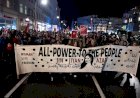
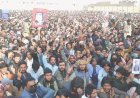
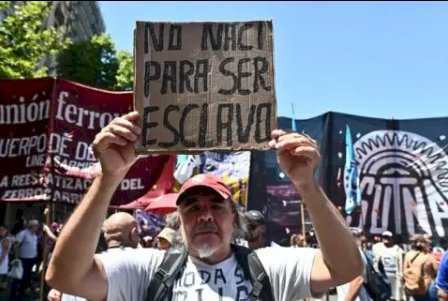
The large turnout at the Plaza, which was filled in all adjacent streets, and the massiveness of many union columns give the indication that the flyer distributed by the Partido Obrero in Congress, titled "we can defeat the labor reform with a serious plan of struggle," has substance. The will to fight has not been broken, but it is battered by the depth of the betrayals and the crisis of leadership in the labor movement. This will was also seen in the significant column of the Garrahan Hospital, which marched with the internal board of ATE and APyT (Association of Professionals and Technicians) at the head, leaving the Hospital, and showing firm support from workers against the sanctions the government intends to impose.
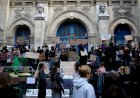
This massiveness also explains the gigantic repressive operation by the government, which cleared the Plaza at 4:00 PM with water cannons, motorcycles, and tear gas, seeking to intimidate and beat the great mass of comrades who had mobilized. As always,the minister of the interior, Bullrich's police advanced with mass arrests, reaching almost 40 detainees. It is clear that the objective of this mega-operation is to continue striking against the right to protest, and to intimidate those of us who are going to confront the reform. From these pages, we call to mobilize and demand the freedom of all prisoners, and we denounce once again the criminality of police action against workers, retirees, and students who took over the Plaza de Mayo to defend nothing more and nothing less than 100 years of labor rights.
Now more than ever, the campaign against the reform must continue. The task of the hour is to return to the workplaces, redouble agitation on social networks, and massively organize the gathering at the Chamber of Deputies, to stop this blow to the living conditions of the working class.