

SEP of Türkiye: “A more advanced international unity is needed for the class struggle”
 Socialist
Aug 19, 2026 05:36
453
Socialist
Aug 19, 2026 05:36
453
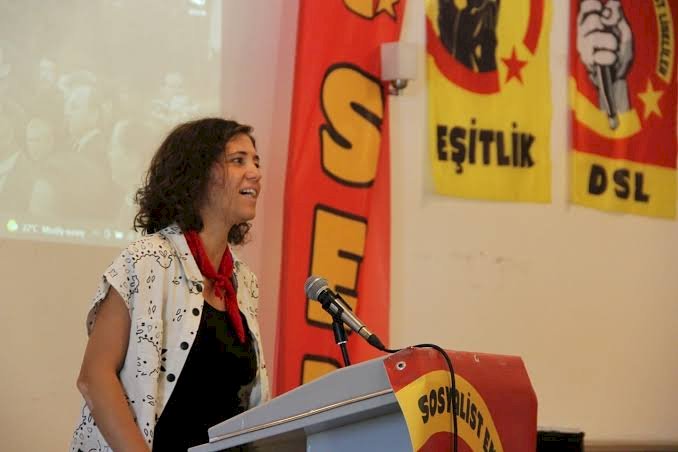
We are publishing the English translation of the interview conducted by Prensa Obrera, the publication of Argentina's revolutionary organization Partido Obrero, with SEP leader Güneş Gümüş on August 16, 2026. The interview contains important analysis of the current situation in Türkiye under Erdoğan's repressive regime, as well as a strategic assessment of the internationalist relationship between the two revolutionary parties. The original interview was posted on Prensa Obrera in Spanish on 16/08/2026.
Turkey has made international headlines for the repressive measures of Erdogan against the political opposition, and the mass movement that erupted in response last year. How has the situation evolved in the last year?
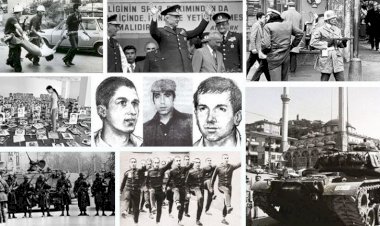
2025 was the year the government made a qualitative leap in using tools of repression to install an authoritarian, dynastic regime. But the country has been governed by increasingly extraordinary methods for the past decade. Within this ten-year period we're referring to, there's the urban warfare that erupted when the Kurdish national movement declared autonomy in some regions, the coup attempt by an Islamic community (Gülen community) that was once the government's partner, and the state of emergency that followed.
During the state of emergency, the government formed a far-right power bloc with the country's fascist party and, through a dubious referendum, carried out a systemic change that made the president a one-man ruler.
Throughout the process that followed, repression against the Kurdish national movement, socialists, and opposition journalists (in other words, the country's living opposition) increased exponentially, and the effective space for exercising democratic rights kept shrinking. At the same time, this process was also the period in which the government established total control over the executive. The country's big bourgeoisie, which had emerged and developed thanks to opportunities provided by the state since the founding of the Republic, also became entirely subordinate to the government during this process.
Since the AKP never wanted to accept losing elections and relinquishing power, and given that international conditions were favorable, they chose to stage a coup against electoral governance. As in the case of Russia, they want to establish a system in which elections ostensibly still take place, ostensibly opposition parties still exist, but a genuinely troublesome opposition is never permitted. In this system where social opposition is crushed, and critics are forced to pay a heavy price, the ruling elites, together with a handful of oligarchs, plunder the country's resources. A major factor in this leap occurring in 2025 was that it had already become clear, from the results of the 2024 local elections, that they could no longer win elections by ordinary means. Turkey is undergoing a sociological shift led by its major cities. The tendency of younger generations to turn their backs on the AKP, the economic crisis impoverishing the lower classes, and the emergence of strong figures from within the bourgeois opposition are all deepening the AKP's anxiety about the future. Here, unfortunately, we must acknowledge that the organized labor movement and socialists have not yet been able to play a sufficiently effective role in opposing the AKP.
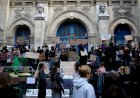
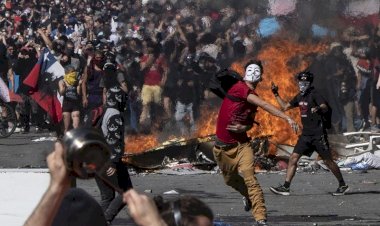
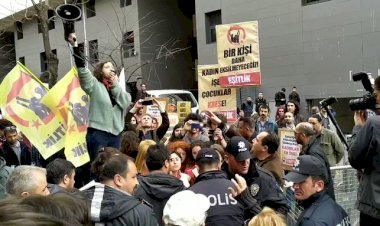
The operation against the opposition on March 19 triggered a major youth movement. University students clearly stamped this mass movement. The working class, however, was not organized or radicalized enough to enter into a generalized political struggle; working-class actions remained confined to local economic struggles. Had the protests turned into a general strike, the outcome would have been entirely different, but that was not the reality on the ground. Because millions of people took to the streets to defend their democratic rights as a mass, the AKP was forced to apply serious brakes. Turkey does not fit into this authoritarian straitjacket being forced upon it. A generation that refuses to live under a tyrannical regime is resisting in the streets. Under the impact of this struggle, the attempts to appoint trustees over the Istanbul Metropolitan Municipality and the social-democratic opposition party (CHP) were postponed for a while, but this did not change the overall trajectory.
The actions that emerged during the March 19 process were focused on democratic rights and secularism; they could not evolve into a class-based force. The poor popular base whose democratic and secular sensibilities are not particularly strong, and which remains under the heavy propaganda of the pro-government media, could only have broken away from the government by joining a new alignment, had it seen a different polarization expressing its own class interests. This class polarization did not need to have Marxist content; as in existing examples around the world, it could also have taken the form of a left-populist polarization pitting the general public against the wealthy elite. Had class polarization moved to the center of politics, the resulting energy could have created powerful working-class dynamism and produced a breakthrough.
Leadership of the March 19 process passed clearly to the CHP after a while. Because they too were under heavy pressure, they wanted to sustain the street actions, but they turned this into a routine of rallies; moreover, they were unable to imbue these rallies with class content. Due to its bourgeois class character encoded in its genetic makeup, the CHP leadership also missed the global left-populist/reformist moment. In the end, this cadre demonstrated neither the universal vision nor the political capacity to combine local democratic reflexes with class-based anger, nor to grasp the global populist left wave. As a result, rather than acting as the one setting the agenda and driving the game, the CHP became trapped in a passive defensive line. This situation made it possible for the government to take a further step and effectively seize control of the CHP.
In the process of the CHP leadership effectively passing into the government's hands via a trustee in May 2026, and the formation of a new party, renewed mobilization emerged among the masses who had voted for the CHP. This process, which has lasted a year and a half, shows that the base of the main opposition has preserved its energy for struggle, capable of coming together in street actions, gatherings, rallies, and protests whenever called upon by its party.
What have the paths to development of revolutionary organization been in these times?
Turkey is a country with a fairly deep-rooted tradition of opposition. This tradition has also lived through periods of repression harsher than today's. Even in the last decade alone, we've seen bomb attacks on mass rallies, the dismissal and suspension of thousands of public employees, the closure of associations under the state of emergency regime, continuous short-term detentions of opposition journalists, the years-long imprisonment of effective representatives of the Kurdish political movement, and systematic operations against main-opposition municipalities.
The space for political work and actions on the street has been continuously narrowed by the police. As an early sign of the leap in authoritarianization that took place in 2025, our party came under police and judicial operation at the end of 2024. The claim was that we are the continuation of a Trotskyist organization that had existed in the 1990s but later disappeared, one that had shown clear sympathy for adventurism and was for that reason targeted and officially registered as a terrorist organization. Judicial and police intervention on the same grounds has continued since then.
But in a country where repression is this severe, deep class contradictions and ethnic-religious oppression have continued, and continue, to feed social opposition and the socialist movement. Even though the youth movement has died down since March 19, a vein of youth within that movement that's shifted further to the left keeps drifting toward socialists, even if not very strong. As a party, we've grown on the back of that pull too.
In Turkey, the government has expanded its wave of repression starting with the elements it sees as the biggest threat to itself. For many years, the Kurdish national movement, a massive force effectively in a state of war with the state, held the position of chief threat. Opposition journalists who reach broad audiences have also frequently taken their share of repression. But after the passage of strong presidential powers into law and the victory in the local elections, it was the main opposition that settled into the category of primary enemy.
Today, even though the conditions of struggle have gotten harder for revolutionaries, the channels of fully legal politics haven't closed entirely. But because authoritarian regimes are fragile, the wave of repression tends to gradually pull in wider and wider segments and reach a point where it can't tolerate even the smallest form of democratic politics. We've seen this tendency clearly through our comrades in Azerbaijan. Turkey won't see an attack like a coup, where socialists are suddenly rounded up into prisons all at once; but the space for politics will keep narrowing, and every kind of political tool will increasingly be obstructed.
We built our party in a period when the socialist movement was losing momentum both physically and ideologically. Under the umbrella of the Kurdish national movement, the majority of socialists became engaged with identity politics. Ideological independence, training qualified cadres, and our steady, consistent work were decisive in making this construction possible. In a period when Stalinist hegemony was very strong on the left, we advanced thanks to being the one party holding this particular political position, and by becoming more and more the organizer of a steady, resolute revolutionary struggle. Identity politics and ideological integration into forms of bourgeois opposition accelerated the loss of standing and ground for the socialist left.
An independent, revolutionary political perspective that argues for breaking away from identity politics and for making class politics the ideological axis of the socialist movement once again will make a real difference in reaching the masses turning their faces toward the socialist left.
Diversifying our party's work with front-organization work has produced successful results in terms of reaching a wider public and organizing. Tools like our arts and culture center in the city center, which has turned into a hub for political-ideological education; our youth association aimed at university students; and the association work we carry out to organize young workers, these have made it possible for us to organize not just beyond the socialist base but also among segments of society with conservative backgrounds. Going forward, we'll continue expanding this front-organization work into more areas as well, arts and culture, trade union organizing for working people across different sectors, YouTube broadcasting, and more.
In the country, the government is trying to keep the economic crisis sustainable in order not to lose mass support. The economic program it's implementing toward that end is grinding working people down step by step. The social energy building up is showing itself through popular discontent. But working people have been left without instruments of struggle. The rate of union organization in the country is under ten percent. The vast majority of existing unions are entirely under the government's control; the rest, too, steer clear of entering into any sharp confrontation with the government or with employers.
What political intervention is the SEP proposing to stand up to Erdogan’s pretensions of reelecting a new term and consolidating his authoritarian regime?
Erdoğan's acceptance of a change in power cannot be achieved through elections alone. This shift cannot happen without a mass mobilization that also brings in the working people.
First of all, it needs to be made clear that these attacks are not aimed solely at the social democratic main opposition. What is being targeted is the right to elect and be elected, the most fundamental democratic rights in the country. Accordingly, the indifference so widespread on the socialist left in the face of this repression is nothing but political blindness.
It is a revolutionary duty to be part of the mass movement rising against the authoritarian straitjacket of the AKP with independent revolutionary demands and tactics.
Within this framework, the first intervention with the masses must be to challenge the notion, long promoted by the main opposition, that elections alone are enough to get rid of this government. Against this naivety and conformism, what's needed is to organize the masses with the aim of putting in the work for the struggle, and being ready to pay a price if necessary.
Another important point in the process of struggle is that a movement built solely around defending democratic rights will fall short of bringing broad sections of working people into the fold. The freedoms and democratic functioning that matter in the daily lives of a significant part of the population are so limited that this agenda alone isn't enough to pull them away from the AKP. Whereas social demands like the minimum wage, cancellation of credit card debts, radical solutions to rent hikes in major cities, free education and healthcare, and increased public sector hiring would find a much wider response.
A mobilization of working people capable of stopping this government will only be possible through a mass, grassroots mobilization that unites the struggle for democratic rights with the burning class demands of working people.
Without the street protests, strikes and organization, and without a leftward shift in society, it is not possible to reverse the authoritarian tendencies imposed by both domestic and international processes. This society must produce this tradition of struggle from within itself. Today, revolutionaries have to work to grow their organized strength, to reach broad sections of working people through class-based campaigns, and to strengthen the organization of the working class. We are trying to carry out this work jointly with other socialist organizations wherever possible. But sectarianism has become an affliction on the socialist left.
What is the state of the Kurdish question after the advance in negotiations between Erdoğan and Öcalan?
The current process reflects the fundamentally altered military and political balance that emerged after the autonomy wars fought in Kurdish cities in 2015-16. The PKK's military presence has been broken, and the DEM Party can't even organize a notable protest in the city regarded as the capital of Turkish Kurdistan, this balance of power is the government's basic starting point. This latest process resembles the FARC process in Colombia far more than it does the 1998 Good Friday Agreement in Ireland. The truth is, the current situation is actually well behind even the Colombian example. The fact that laying down arms has been put forward as a precondition is itself an expression of this asymmetric balance of power.
The AKP is steering the negotiation process entirely according to its own needs. It's these "needs" that will determine the fate of the process: the desire to hold onto power, and the wish to get ahead of any Kurdish autonomous administrations that might emerge from fractures in the region.
In the process that began in October 2024 at the call of the leader of the AKP's fascist partner, the MHP, not a single concrete step, not even the simplest one, was taken over a year and a half. Throughout the March-September period, when the March 19 operations took place and mass reaction continued, negotiations were set aside altogether. The winner of this politics of stalling is none other than the government itself.
What Erdoğan really wants is for the DEM Party to stop functioning as an opposition party. Staying away from the struggle on the ground while a life-or-death fight for democracy and freedoms is being waged in this country means abandoning the very quality of being in opposition.
The negotiation process is also doing great damage to the possibility of a solution to the Kurdish question in this country. Peace doesn't come from above without the masses being won over. Throughout this process, the government hasn't changed its rhetoric on the Kurdish question at all; it hasn't even tried to ideologically persuade its own base.
The permanent base of the AKP and the MHP is being brought along in the negotiation process with lines like "they must know something we don't" or "this is a tactical alliance, and we'll come out ahead." A mega issue of freedom and democracy like the Kurdish question cannot be resolved with this kind of outlook. The AKP-MHP bloc wants to bring the country under authoritarianism in which the very reality of elections is called into question. Neither freedom, nor democracy, nor a solution to the Kurdish question can come out of this mindset.
The handover of autonomy in the Rojava region, a historic gain for the Kurdish people achieved at great cost, to the al-Sharaa administration, which does not step outside the AKP's word, along with Öcalan's call for laying down arms and integration in Rojava, also represents a major step backward.
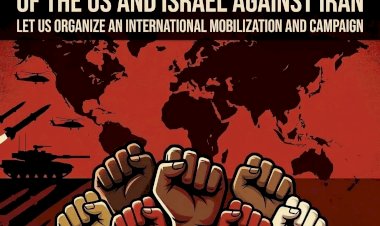
What changes do you see in the masses in the Middle East after the blows dealt by Iran against the attacking forces of the US and Israel?
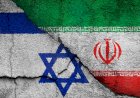
There's no doubt that Iran's prestige has grown in the eyes of the masses across the Middle East. In this context, Hezbollah in Lebanon, Hashd al-Shaabi in Iraq, and the Houthis in Yemen will also come out stronger. The hand of Palestinian resistance groups will likewise be strengthened somewhat by Iran's growing influence. But from the standpoint of class struggle, the picture is a bit different. Iran's victory can't have an effect that raises class consciousness among the masses or strengthens class organizations and struggle. On the contrary, pro-Iranian groups in Iraq, and to a certain extent in Lebanon, are pursuing policies of repression against left groups that want to organize a shared, cross-sectarian class struggle.
Between 2019 and 2020, around 1,000 Iraqi protesters were killed by pro-Iranian Shia militias. The overwhelming majority of those killed were working-class youth of Shia background. The mass movement in the Middle East is developing as a struggle against dictators, corruption, unemployment, and sectarianism. The alternative, unfortunately, is ethnic and religious bloodletting. Millions of people lost their lives this way following the US occupation of Iraq and during the Syrian civil war. Lebanon had lived through similar suffering before that.
In the current situation, Iran is in no position to inspire progressive forces in the Middle East, both because of the repressive theocratic capitalist order it runs at home, and because it is a party to sectarian polarization. The masses have expectations of democratic rights, a good future, jobs, women's rights, and so on. They need instruments of struggle to fight for these class-based expectations. We know that independent unions and left parties are kept under pressure across the region. Under these conditions, the mass movement, gripped by pessimism, either retreats or dreams of emigrating to developed countries. On the other hand, the conditions for social explosions keep ripening with every passing day. That's why it's so important for revolutionary centers of organization to develop.
PO presented a contribution to the Athens conference on “The revolutionary international and the reconstruction of the Fourth International”. What is your consideration of this programmatic document? What steps do you think can be taken in this direction?
We need a more advanced international unity among revolutionary Marxist parties. We support the anti-war will that has taken shape in Naples and Athens, and we find it very meaningful. On the other hand, it's also clear that a more advanced international unity is needed for the purposes of the class struggle. There may still be some distance to cover on the road toward unities requiring a much more advanced programmatic agreement, like a new International or the reconstruction of the 4th International.
Even if a high-level programmatic partnership and clarity aren't yet possible on this front, as an intermediate stage, groups that have managed to take similar positions on current international issues, polarizing ones like war, where divisions and clarity come to the surface, and that share similar emphases and priorities need to present themselves as an international front.
Thus this unity should offer an alternative to the masses shifting leftward worldwide, whether in terms of class struggle or the general pull of socialism. To do this, we have to establish certain principles and, through them, clarify the political platform and program of the international front. The front needs to be open to structures and individuals who embrace these principles, moving from the concrete to the abstract; this is how it becomes possible to rise up as a real address.
Another aspect of this is the fact that building a revolutionary party cannot rise on a national basis alone. In our era, international interaction, processes of joint policymaking, processes of joint determination, and awareness have reached a very high level. This continually reinforces the idea, among advanced elements internationally, that international solutions need to be sought for these issues. In this context, staying confined to a national basis, or limiting oneself to symbolic international statements and efforts, will not be satisfying for the vanguard forces.
There's another point too: for instance, the PTS and the MST are making progress along their own opportunist lines by forming international unions. So why shouldn't this kind of international unity be achieved along a more correct line? It's not at all difficult to see that progress can be made on this front. It matters a great deal to discuss these things with groups in different parts of the world, not just in countries where the world's voice is rising, from India to the US, from Mexico to Iran. The development of revolutionary Marxist tendencies in every country carries historic importance; so why shouldn't we also take the initiative and be at the forefront of driving these discussions? We will call ourselves a front, we will build a certain platform, and we will try to get involved in struggles around that platform. Social media accounts, a website, and periodic activities, efforts, and campaigns carried out simultaneously will certainly carry us into the center of the international agenda. On this front, we can put forward the means we have whenever necessary, and we can create the means that are needed.
SEP of Türkiye: “A more advanced international unity is needed for the class struggle”