

After Venezuela: The Vultures Have No Intention of Stopping!
 Socialist
Jan 7, 2026 08:52
1441
Socialist
Jan 7, 2026 08:52
1441
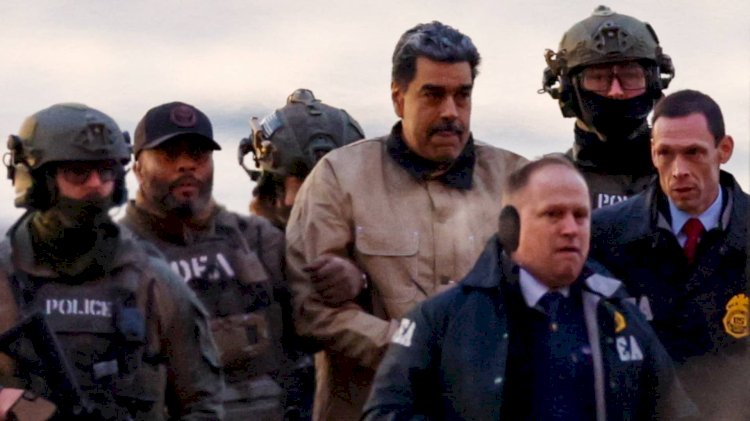
As expected, 2026 opened amid dramatic developments. U.S. imperialism, which has long viewed Venezuela as a strategic target, carried out a midnight operation on January 3, abducting President Nicolás Maduro and his wife, Cilia Flores, and forcibly transferring them to the United States.
An assault on Venezuela had been widely anticipated. The Caribbean has not witnessed a military buildup of this scale since the 1962 Cuban Missile Crisis; Venezuelan vessels were targeted, and more than one hundred people lost their lives in U.S. attacks. It also became clear that intelligence operations had penetrated as far as Maduro’s inner circle. Trump had granted the CIA full authority to conduct covert operations against Venezuela. In October, media reports revealed that a U.S. agent had approached Maduro’s chief pilot with an offer to lure the president to a location where U.S. forces could seize him.
Ultimately, Maduro was brought before a sham court in the United States yesterday. From the moment of his abduction, he has been held hostage to Trump’s spectacle-driven banditry that is turned into a reality show, accompanied by images evoking a level of barbarism reminiscent of the Middle Ages.
Venezuela and the New Era of Imperialist Plunder
U.S. imperialism is justifying its aggression against Venezuela through unfounded claims, much as it did with the false allegations of chemical and biological weapons used to legitimize the 2003 invasion of Iraq. The Trump administration’s concern is neither democracy in Venezuela nor, as is often claimed, drug trafficking. By abducting Maduro, Trump has taken the first step toward implementing the so-called “Donroe Doctrine,” reconstructed with explicit reference to the Monroe Doctrine. Since the Chávez era, Venezuela’s leadership has been a declared target, and the country’s governance has now been directly taken over by the Trump administration itself. The possibility of Maduro’s vice president, Delcy Rodríguez, assuming power will not alter the nature of this pressure. The U.S. imperialist military buildup in the region, coupled with its permanent capacity for intervention, will continue to hang over the new regime like a sword of Damocles. Moreover, the Venezuelan state apparatus that has been reduced to ruins by years of misrule, appears to be in a process of disintegration. Worn down by deep poverty and cumulative exhaustion produced by entrenched corruption in governance, the Venezuelan people now face a profound uncertainty over what leadership, if any, can organize an effective anti-imperialist response.
As we have emphasized on numerous occasions, this unresisting surrender in Venezuela is directly linked to the transformation in the class character of the Maduro government. In 2002, Chávez was able to escape the grip of the coup plotters thanks to the determination of millions who filled the streets of Caracas. Today, although there are still crowds in those same streets willing to stand by Maduro, the decades that have passed have left little of that revolutionary fervor intact. Chávez, for all his shortcomings, rose to power with revolutionary claims, mobilized the masses, and most importantly was a genuine leader capable of offering a concrete program supported by material resources. At the same time, Chávez’s rise coincided with a broader left-wing surge across Latin America. Maduro, by contrast, who, in a manner of speaking, parachuted into power after Chávez, has become little more than a caricature of his predecessor. Falling oil prices, imposed sanctions, astronomically rising inflation, and deepening impoverishment, combined with corruption and decay within the regime’s elite, have steadily eroded both the regime’s and Maduro’s social base. At this point, despite reportedly offering a deal to Trump, Maduro was left with no meaningful support to withstand the assault he faced.
If we are to draw a general conclusion from this, a regime that is decayed and has lost much of its social support, as in the case of Venezuela, is incapable of mounting any genuine resistance to imperialist aggression. Maduro’s being taken captive with ease demonstrated how vulnerable a corruption-ridden and decayed bureaucracy becomes when confronted with the purchasing power of capital.
Global Hegemony Wars: The China and Iran Equation
Through his statements, the Trump administration has also signaled new offensives: Trump personally advised Colombian President Gustavo Petro to “watch his back,” and Cuba has once again been placed in the crosshairs. Moreover, Trump reiterated his intention to take control of Greenland, despite the fact that it remains under the sovereignty of Denmark, a NATO member state. In short, the expansion of international imperialist rivalry, in which the law of the jungle prevails, is no longer a mere possibility but is increasingly taking the form of a concrete reality.
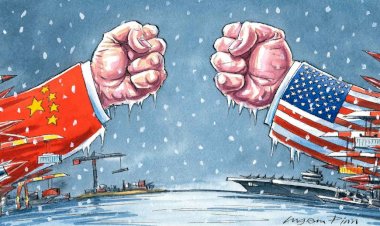
The show of force in Venezuela should also be read as a message directed at China. Although China is advancing toward becoming an economic giant, it is not yet in a position to compete with U.S. imperialism across all domains in terms of military and diplomatic capacity. Indeed, in the aftermath of the attack, the Chinese leadership did not go beyond issuing a perfunctory diplomatic condemnation. That said, it is worth noting the following: the emergence of a world in which those who hold power can intervene against those they perceive as weaker without hesitation creates conditions that may rekindle China’s ambitions regarding Taiwan. However, this is more likely to take a form closer to what we witnessed in Russia’s invasion of Ukraine, rather than a scenario resembling U.S. intervention in Venezuela. Taiwan’s capacity for resistance, having been heavily armed for a prolonged period, would far exceed that of Venezuela.
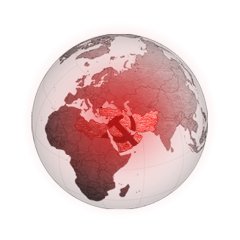
A process similar to that unfolding in Venezuela is also taking shape in Iran; as a result of sanctions and corruption, the bond between the people and the regime is steadily eroding. The U.S.–Israeli partnership views the overthrow of the regime by the Iranian people as a more reliable option than a direct military operation. Last year, Israel’s assassinations targeting elites of the clerical regime exposed the regime’s vulnerabilities. In the aftermath, however, Israel was forced into a temporary retreat in the face of resistance coming from Iran. In 2026, calls for new operations against Iran are being voiced with increasing intensity. A plan to assassinate Khamenei is reportedly on the table of Trump and Netanyahu. Moreover, domestic social unrest is steadily growing. The greatest risk in this context, however, is that justified popular anger against the regime may be manipulated by monarchist reactionary forces or imperialist projects in the absence of an organized left leadership. In Iran, as in Venezuela, unless a revolutionary and socialist current is built, the fall of a dictator will merely serve to expand the plunder zone of the “vultures.”
We are living through a moment reminiscent of the “time of monsters” once described by Gramsci. Empowered by the immense force at its disposal, the Trump administration is attempting to shape the spirit of the age in the direction of the far right and imperialist banditry. Israel’s genocide in Gaza and the attacks against Venezuela are products of this same spirit. Against this barbarism, no outcome will be possible except through the organized resistance of the peoples of the world.